
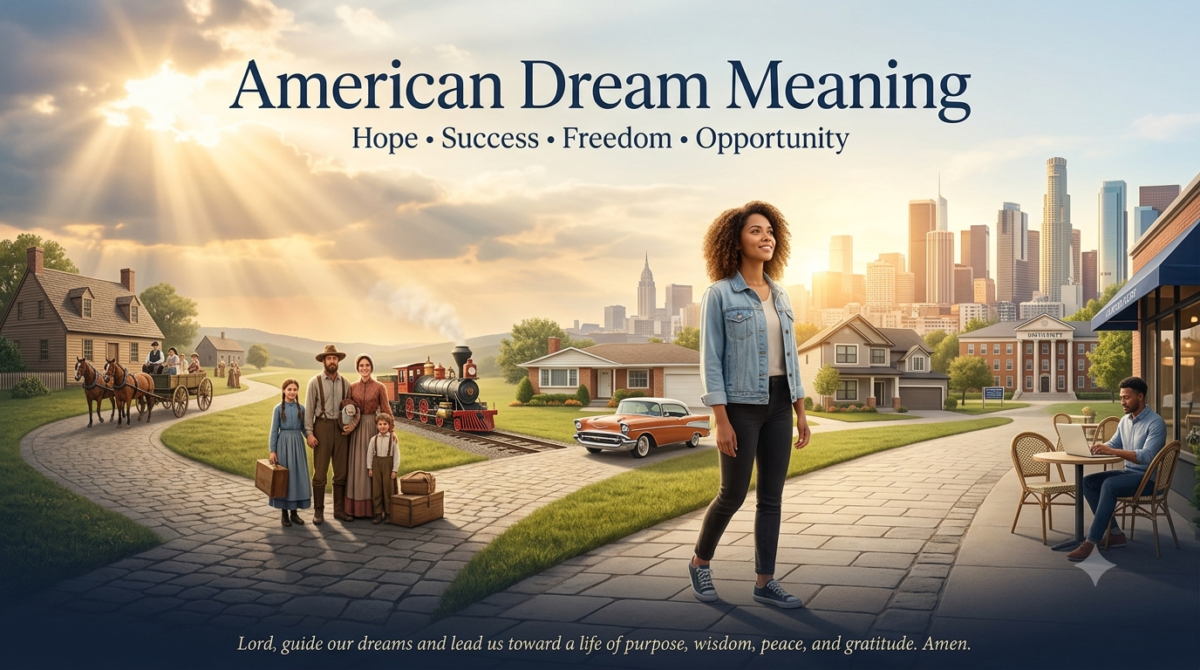
The American Dream meaning is often connected with hope, freedom, success, and the belief that people can build a better life through hard work and determination. It represents the idea of creating opportunities and achieving personal goals.
But what if the American Dream appears in your thoughts, feelings, or even your dreams? Could it be pointing to your desire for a fresh start, greater independence, or a life you have always imagined? This idea can carry different meanings depending on your experiences and emotions.
Understanding the American Dream meaning can help you explore deeper ideas about ambition, opportunity, financial goals, freedom, family, and personal growth. Whether you see it as a cultural idea or a personal symbol, its meaning may reveal what you truly hope to achieve in life.
What Is the American Dream Meaning?
The American Dream meaning is the belief that people can create a better life through opportunity, hard work, freedom, and determination. It is often connected with success, financial stability, education, family, independence, and the hope of reaching goals regardless of where someone starts.
The American Dream can mean different things to different people. For one person, it may mean owning a home and building a secure family life, while for another, it may mean starting a business, receiving an education, becoming successful in a career, or simply having the freedom to choose their own path.
See Also: Bad Dream Meaning: Discover What Your Nightmares May Reveal
Spiritual Meaning of the American Dream
Spiritually, the American Dream can represent hope, purpose, growth, opportunity, and the desire for a meaningful life. It may symbolize a person’s inner wish to move forward, overcome difficulties, use their abilities wisely, and create a future that reflects their values.
At a deeper level, the idea can remind us that success is not only about money, possessions, or social status. Spiritual growth can involve gratitude, compassion, honesty, service, family, peace, and finding purpose. The healthiest interpretation is to seek achievement without allowing material success to become the only measure of a good life.
Psychological Meaning of the American Dream
Psychologically, the American Dream can represent a person’s desire for security, achievement, independence, recognition, and a better future. It may reflect inner motivation to overcome difficulties, reach personal goals, gain confidence, and create a life that feels meaningful.
At the same time, the American Dream can create pressure when success is measured mainly through money, possessions, career status, or social comparison. Psychologically, a healthier approach is to define success according to personal values, relationships, purpose, and realistic goals rather than constantly comparing your progress with others.
American Dream Meaning in English
In simple English, the American Dream means the idea that anyone can work toward a better and more successful life if they have opportunities and are willing to make an effort. It is commonly associated with freedom, equality, ambition, prosperity, and personal achievement.
In everyday use, people may say they are “living the American Dream” when they have achieved goals such as getting a good job, buying a home, raising a family, starting a successful business, or becoming financially secure. The literal idea focuses on achieving a better life, while the broader meaning includes hope, freedom, opportunity, independence, and personal fulfillment.
History of the American Dream
The American Dream developed from ideas about freedom, opportunity, self-determination, and the possibility of building a better future. Although the exact phrase became popular much later, many of the ideas behind it can be traced through American history and the experiences of people seeking a new beginning.
The American Dream in the 18th Century
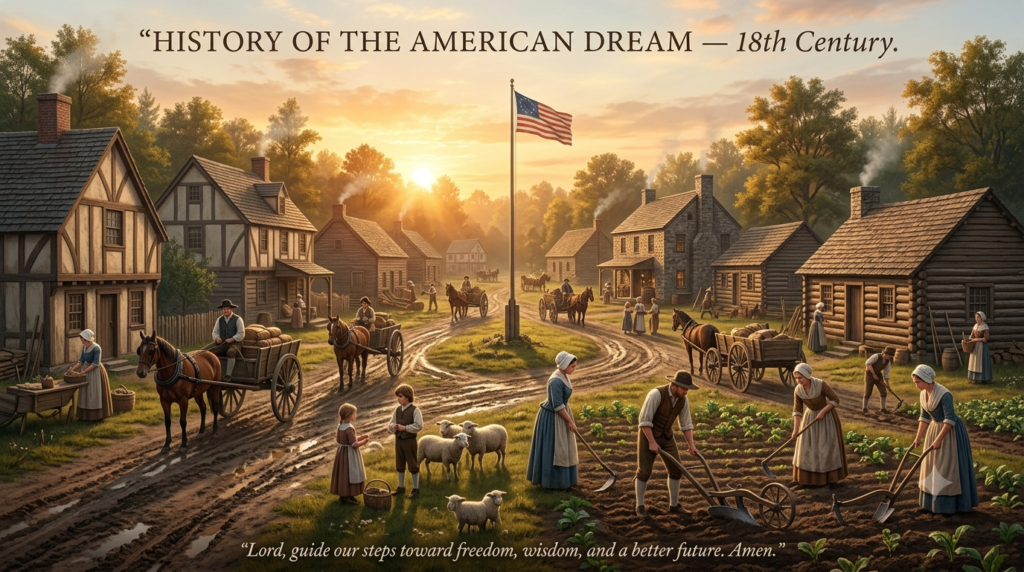
During the 18th century, ideas of liberty and individual rights became increasingly important in American political and social life. The American Revolution and the founding of the United States helped strengthen beliefs about freedom, independence, and the possibility of creating a new society.
For many people, the dream was connected with having greater control over their lives and opportunities. However, it is important to remember that these opportunities were not equally available to everyone, and many groups faced serious restrictions and discrimination.
The American Dream in the 19th Century
During the 19th century, the American Dream became increasingly connected with land, work, economic opportunity, westward expansion, and social mobility. Many people hoped that hard work could help them gain property, establish businesses, support families, and improve their circumstances.
Industrial growth and immigration also influenced the idea. Millions of people came to America hoping for better opportunities, although the reality could involve poverty, difficult working conditions, inequality, and major social challenges.
The American Dream in the 20th Century
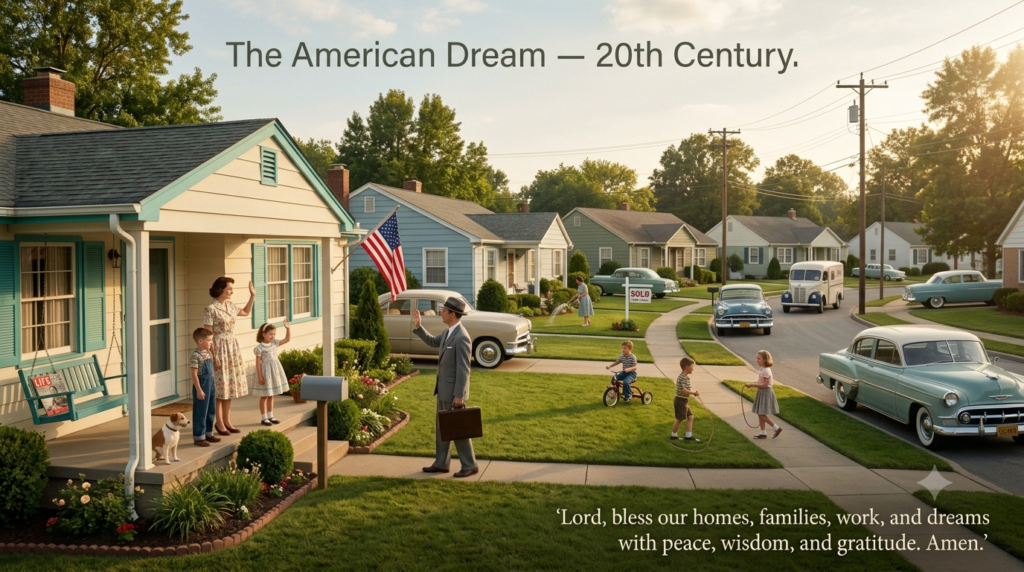
During the 20th century, the American Dream became strongly associated with homeownership, education, career success, consumer prosperity, and financial security. After major periods of economic and social change, having a stable job, a family, a house, and a comfortable lifestyle became common symbols of success.
At the same time, writers, activists, and ordinary Americans questioned whether everyone had equal access to these opportunities. The century therefore expanded the conversation from simply achieving wealth to considering equality, civil rights, social mobility, and access to opportunity.
Read Also: Symbolic Immersion Dreams: Explore Their Hidden Meanings & Spiritual Signs
What Is American Dream in Literature?
In literature, the American Dream is often used as a theme to explore people’s hopes for success, freedom, wealth, love, identity, and a better future. Writers may show characters working toward their dreams while facing obstacles such as poverty, social pressure, discrimination, loneliness, or unrealistic expectations.
Literary works can also question whether material success truly brings happiness. Some stories present the American Dream as inspiring and achievable, while others show its darker side by exploring disappointment, inequality, obsession with wealth, or the emotional cost of constantly chasing success.
Evolution of the American Dream
The American Dream has evolved from a strong focus on freedom, land, opportunity, and independence into a broader idea of success and personal fulfillment. Over time, education, career development, homeownership, financial security, and family life became important parts of the dream.
Today, the meaning continues to change as people face new economic and social realities. Many now see the American Dream as having flexibility, meaningful work, emotional well-being, personal freedom, strong relationships, and enough security to live according to their values—not simply becoming wealthy.
American Dream Movie
Movies often portray the American Dream through characters who want to improve their lives, overcome hardship, become successful, or achieve a goal that once seemed impossible. Their journeys may include hard work, setbacks, sacrifices, opportunities, and important personal choices.
Common movie themes include ambition, struggle, success, failure, family, money, freedom, perseverance, and social mobility. Films such as The Pursuit of Happyness, Rocky, and The Great Gatsby—though very different in style and message—can help audiences think about how success and opportunity are represented in American culture.
Common Scenarios in American Dream Movies
| Scenario | Possible Meaning |
|---|---|
| Starting with very little | Hope for a better future |
| Working toward a career | Ambition and determination |
| Starting a business | Independence and opportunity |
| Facing financial hardship | Struggle and perseverance |
| Becoming successful | Achievement and progress |
| Losing success | The uncertainty of material achievement |
| Supporting a family | Responsibility and love |
| Overcoming social barriers | Equality and determination |
| Chasing wealth | Desire for security or status |
| Choosing happiness over money | A broader definition of success |
Examples of the American Dream
The American Dream does not have only one definition. It can involve financial success, personal freedom, family stability, education, meaningful work, or the opportunity to create a better future.
- Building a successful career — Working toward a profession that provides purpose, stability, and personal achievement.
- Starting a business — Creating something independently and turning an idea into an opportunity.
- Owning a home — Seeking a stable place where a person or family can feel secure.
- Getting an education — Learning new skills and gaining knowledge that can create future opportunities.
- Creating a better future for your family — Working toward greater stability and opportunities for loved ones.
- Achieving personal freedom and independence — Having the ability to make important choices about your own life.
- Overcoming difficult circumstances — Turning challenges into motivation for positive change.
- Achieving financial stability — Being able to meet important needs and plan for the future.
- Following a personal passion — Building a life around meaningful interests, talents, and goals.
- Contributing to society — Using personal success to help others and make a positive difference.
The American Dream Summary
The American Dream is the idea that people should have opportunities to build a better life through freedom, effort, determination, and personal choices. Traditionally, it has been connected with homeownership, education, career success, financial security, family, and upward mobility.
Its influence has lasted because it represents something many people understand deeply: the hope that tomorrow can be better than today. However, the meaning has changed over time, and many people now define success through happiness, relationships, purpose, balance, and personal freedom rather than wealth alone.
The American Dream Today

Today, people understand the American Dream in many different ways. Some still associate it with a successful career, homeownership, financial independence, and a comfortable family life, while others define it through flexibility, meaningful work, education, creativity, personal freedom, or a healthy work-life balance.
Modern realities have also changed the traditional picture. Rising housing costs, changing careers, education expenses, economic uncertainty, and differences in access to opportunities can make traditional goals harder to reach. As a result, many people are redefining the American Dream around well-being, purpose, security, and personal fulfillment rather than simply accumulating wealth.
Is the American Dream Still Alive?
The American Dream is still alive for many people because the desire for opportunity, freedom, progress, and a better future remains powerful. People continue to pursue education, careers, businesses, homes, family goals, and personal ambitions while believing that effort and opportunity can improve their circumstances.
However, the dream is not equally easy for everyone to achieve. Economic inequality, expensive housing, education costs, job competition, and other social challenges can create significant barriers. This has led to an important question: Is success mainly the result of hard work, or does opportunity and circumstance also play a major role?
The American Dream Meaning in Islam
The American Dream is not an Islamic concept, but some of its values can be viewed through Islamic teachings. Seeking lawful work, providing for one’s family, developing useful skills, and working toward a stable life can be positive when these goals are pursued through halal means, honesty, responsibility, and gratitude.
Islam also teaches that worldly success should not become the only goal of life. Wealth and achievement are blessings when used responsibly, but a person’s ultimate worth is not determined simply by possessions or social status. Faith, good character, justice, gratitude, and righteous actions are also important parts of a meaningful life.
The American Dream Meaning in the Bible
The Bible does not specifically teach the American Dream because the concept developed within American history much later. However, biblical teachings can provide a framework for thinking about work, wealth, ambition, responsibility, contentment, and helping others.
For example, Proverbs 16:3 teaches, “Commit thy works unto the LORD, and thy thoughts shall be established” (KJV). This can encourage people to place their plans and efforts in God’s hands while working responsibly toward their goals. The biblical perspective also reminds believers not to make material wealth the foundation of their identity or happiness.
What Does the American Dream Mean to You?
For one person, the American Dream may mean financial independence; for another, it may mean a loving family, education, a peaceful home, meaningful work, or the freedom to follow a personal passion. Your own definition can be shaped by your experiences, values, goals, relationships, and vision for the future.
Thinking about your own American Dream can help you ask meaningful questions: What kind of life do I truly want? What does success mean to me? What would make me feel fulfilled? These questions can help you separate genuine goals from expectations placed on you by society, family, or popular culture.
Is the American Dream Good or Bad?
The American Dream can be good when it inspires hope, hard work, education, creativity, independence, generosity, and the pursuit of meaningful goals. It can encourage people to believe that difficult circumstances do not necessarily have to define their entire future.
However, it can become harmful when success is measured only by money, possessions, popularity, or status. Constantly comparing yourself with others or believing that every person can achieve the same results through hard work alone can create unrealistic expectations. A healthier view is to combine ambition with gratitude, balance, ethical choices, relationships, purpose, and personal well-being.
You Might Also Like: What Do Dreams Mean? Explore Their Spiritual & Symbolic Meaning
Conclusion
The American Dream represents hope, opportunity, freedom, and the desire to build a better life. Its meaning has changed throughout history, from independence and property to education, career success, family, security, and personal fulfillment. While challenges can make the traditional dream difficult for some people, its central idea remains powerful. Ultimately, the American Dream does not have one definition. Each person can shape it around their values, goals, relationships, purpose, and vision for a meaningful future.
Frequently Asked Questions
What is the American Dream in simple terms?
The American Dream is the idea that people can work toward a better life through opportunity, freedom, and determination. It is often linked with success, security, independence, and personal goals.
What are examples of American dreams?
Examples include getting an education, building a career, starting a business, buying a home, and supporting a family. Personal freedom, financial stability, and meaningful work can also represent the dream.
Why do they call it the American Dream?
It is called the American Dream because it describes the hope that people can create better lives through opportunity and freedom. The idea became closely associated with American society and its vision of upward mobility.
What is your definition of the American Dream?
The American Dream can be defined as the opportunity to pursue a fulfilling life according to your goals and values. It can include success, freedom, family, security, education, and personal growth.
5. Is the American Dream a good or bad thing?
The American Dream can be positive when it encourages hope, effort, growth, opportunity, and meaningful goals. It can become unhealthy when success is judged only by wealth, status, possessions, or social comparison.
What does the American Dream symbolize?
The American Dream commonly symbolizes hope, freedom, opportunity, ambition, and the possibility of a better future. Its meaning can differ depending on a person’s experiences and priorities.
Is the American Dream still important today?
Yes, many people still value the ideas of opportunity, independence, security, and personal achievement. However, modern people often define success more broadly than traditional measures such as wealth and homeownership.
What is the American Dream in literature?
In literature, the American Dream is often a theme involving ambition, success, wealth, freedom, and social mobility. Writers may celebrate the dream or question whether it is equally achievable for everyone.
How has the American Dream changed?
The American Dream has expanded from ideas of land and independence to include education, careers, financial security, family, and personal fulfillment. Today, happiness, flexibility, purpose, and work-life balance may also be part of it.
Can the American Dream mean different things to different people?
Yes, there is no single definition that applies to everyone.
One person may value financial success, while another may prioritize family, freedom, education, peace, or meaningful work.