
The Lord’s Prayer, beginning with “Our Father who art in Heaven,” is one of the most cherished prayers in Christianity. Jesus taught this prayer to His disciples as a simple and powerful way to approach God with faith, humility, and trust.
This prayer reminds believers that God is a loving Father who hears His children. Every line carries a meaningful message about worship, forgiveness, daily needs, guidance, and protection, making it a prayer for every season of life.
Have you ever wondered why these simple words have brought comfort to millions of people for generations? As we explore The Lord’s Prayer: Our Father Who Art in Heaven, you will discover the meaning behind each phrase and how this timeless prayer can deepen your faith and relationship with God.
The Lord’s Prayer: Our Father Who Art in Heaven
The Lord’s Prayer, beginning with the beautiful words “Our Father who art in Heaven,” is one of the most well-known prayers in Christianity. Jesus taught His disciples how to pray, giving believers a simple but deeply meaningful pattern for approaching God with worship, trust, humility, and faith.
This prayer is more than words repeated from memory. It teaches us to honor God, seek His will, ask for our daily needs, forgive others, ask for forgiveness, and depend on Him for guidance and protection. Whether you pray it in church, at home, before sleep, or during a difficult moment, the Lord’s Prayer can bring your heart back to God.
See Also: Heartfelt Prayers Before Meals & Dinner Blessings for Every Table
What Is the Lord’s Prayer?
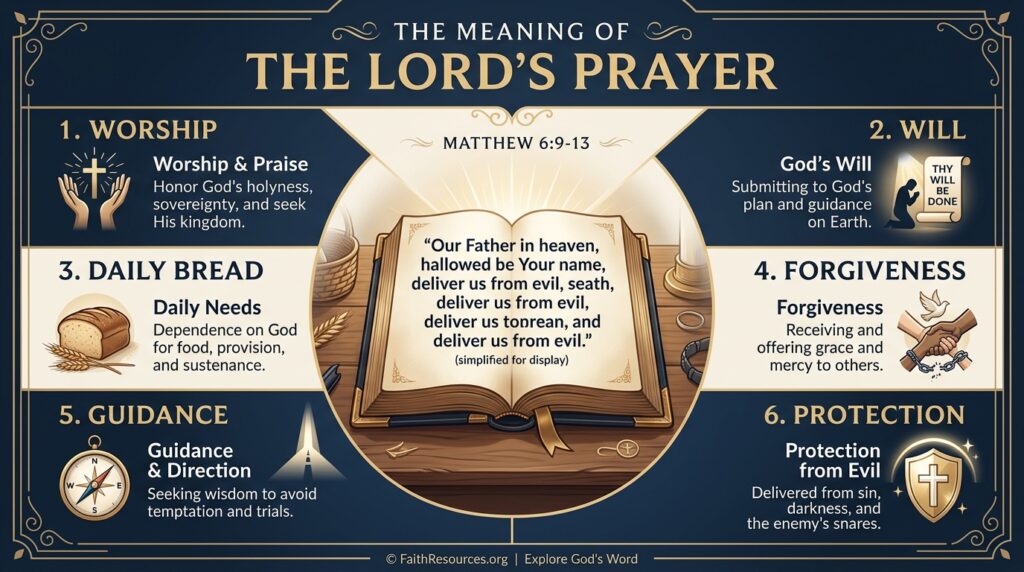
The Lord’s Prayer is the prayer Jesus taught His disciples when they asked Him how they should pray. It appears in Matthew 6:9–13 and in a shorter form in Luke 11:2–4. It is commonly called the “Our Father” because it begins by addressing God as Father.
The prayer gives Christians a beautiful model for prayer. It starts by focusing on God’s name and kingdom before turning toward personal needs. This order teaches believers to place God at the center while trusting Him with everything they need each day.
The Lord’s Prayer in Traditional English
The traditional King James Version wording is:
- Our Father which art in heaven,
- Hallowed be thy name.
- Thy kingdom come.
- Thy will be done in earth, as it is in heaven.
- Give us this day our daily bread.
- And forgive us our debts, as we forgive our debtors.
- And lead us not into temptation,
- but deliver us from evil.
- For thine is the kingdom, and the power, and the glory, for ever. Amen.
What Does “Our Father Who Art in Heaven” Mean?
The words “Our Father who art in Heaven” begin the Lord’s Prayer by showing both closeness and reverence toward God. Calling God “Father” expresses a relationship of love, trust, and dependence, while “in Heaven” points to His greatness, holiness, and authority.
The word “our” is also meaningful because the prayer is not only about one person. It reminds Christians that faith includes a connection with other people and encourages believers to pray with a spirit of love, unity, and concern for others.
“Hallowed Be Thy Name” Meaning
“Hallowed be thy name” means that God’s name should be honored as holy. Before asking God for personal blessings, the prayer directs our attention toward who God is and the reverence He deserves.
This part teaches an important spiritual lesson: prayer is not simply about asking for things. It is also about worship, gratitude, and recognizing God’s holiness. When we honor God first, our hearts can become more focused and humble.
“Thy Kingdom Come” Meaning
The words “Thy kingdom come” express a desire for God’s kingdom and righteous rule to be revealed in the world. Christians pray for God’s goodness, justice, peace, and love to influence their lives and communities.
This line can also encourage believers to examine their own hearts. Instead of only asking God to change circumstances around them, they can ask Him to help them live according to His values and reflect His love through their actions.
“Thy Will Be Done” Meaning
“Thy will be done in earth, as it is in heaven” is a powerful expression of trust and surrender. It teaches believers to place God’s wisdom above their own limited understanding and to seek His direction.
Sometimes life does not unfold as we expect. This part of the prayer encourages patience and faith during uncertainty. It does not mean that people should stop caring about their hopes or responsibilities; rather, it encourages them to bring those hopes to God while trusting His wisdom.
“Give Us This Day Our Daily Bread” Meaning
The phrase “Give us this day our daily bread” represents a request for daily provision. Bread can be understood literally as food, while the broader message points toward the everyday necessities of life.
This line teaches contentment and dependence on God. Instead of becoming consumed by worries about the distant future, believers are encouraged to trust God with today’s needs while responsibly doing what they can.
What “Daily Bread” Can Represent
- Food and basic necessities
- Strength for the day ahead
- Wisdom for everyday decisions
- Peace during difficult circumstances
- Spiritual nourishment
- Help with responsibilities
- Contentment with what God provides
- Trust for tomorrow
“Forgive Us Our Debts” Meaning
The request “forgive us our debts” refers to the need for forgiveness. In this context, “debts” is commonly understood as a way of describing sins or wrongs against God.
This part of the prayer encourages honest self-reflection. Christians are reminded that everyone needs God’s mercy and that prayer can be a place to acknowledge mistakes, seek forgiveness, and desire a changed heart.
“As We Forgive Our Debtors” Meaning
The Lord’s Prayer connects receiving forgiveness with extending forgiveness to others. This does not mean that hurtful situations are insignificant or that forgiveness requires ignoring wrongdoing. Instead, it teaches believers to release hatred and resentment and to pursue mercy.
Forgiveness can be difficult, especially when someone has caused genuine pain. The prayer encourages Christians to develop a heart that values mercy while still recognizing the importance of wisdom, healthy boundaries, and appropriate accountability.
“Lead Us Not Into Temptation” Meaning
The words “lead us not into temptation” express a request for God’s help when facing situations that could pull a person away from what is right. They reflect humility because they recognize that people need guidance and strength.
This part of the prayer encourages believers to remain alert to choices, habits, and influences that could weaken their faith. It is a reminder to seek God’s wisdom before making decisions and to ask for strength when facing challenges.
“Deliver Us From Evil” Meaning
The request “deliver us from evil” expresses a desire for God’s protection and help against evil. It reflects confidence that believers do not have to face every spiritual and moral challenge alone.
This line can be especially meaningful during times of fear, uncertainty, or hardship. It reminds Christians to place their trust in God and seek His guidance, wisdom, peace, and protection.
The Seven Main Lessons of the Lord’s Prayer

The Lord’s Prayer contains several powerful lessons that can shape a Christian’s daily spiritual life.
- Worship: Put God at the center of prayer.
- Reverence: Recognize the holiness of God.
- Surrender: Seek God’s will rather than relying only on personal understanding.
- Dependence: Trust God for daily needs.
- Forgiveness: Ask God for mercy and learn to extend mercy.
- Guidance: Seek strength when facing temptation and difficult choices.
- Protection: Trust God to help you through evil and hardship.
Why Is the Lord’s Prayer So Powerful?
The Lord’s Prayer is powerful because it covers the most important areas of a believer’s relationship with God in a few simple lines. It includes worship, surrender, provision, repentance, forgiveness, guidance, and protection, making it relevant to both peaceful and difficult seasons of life.
Its simplicity is part of its beauty. You do not need complicated words to speak to God. The prayer teaches that sincere prayer can begin with a humble heart that recognizes God, brings daily needs before Him, and seeks His wisdom. It can become a foundation for a deeper and more consistent prayer life.
Read Also: Why Is It Called Good Friday? The Powerful Meaning Behind Jesus’ Sacrifice
Lord’s Prayer Meaning Line by Line
| Prayer phrase | Simple meaning |
|---|---|
| Our Father in Heaven | Approach God as Father with love and reverence |
| Hallowed be Thy name | Honor God’s holy name |
| Thy kingdom come | Desire God’s righteous rule and purposes |
| Thy will be done | Trust and seek God’s will |
| Give us our daily bread | Ask God for daily provision |
| Forgive us our debts | Ask God for forgiveness |
| As we forgive others | Practice mercy toward others |
| Lead us not into temptation | Ask for guidance and strength |
| Deliver us from evil | Seek God’s protection |
| Thine is the kingdom and glory | Give God praise and acknowledge His authority |
How to Pray the Lord’s Prayer With Meaning
The Lord’s Prayer can be prayed slowly instead of rushing through the familiar words. Pause after each phrase and think about what it means personally. When you say “Thy will be done,” for example, take a moment to surrender your worries and plans to God.
You can also use each section as a starting point for personal prayer. After asking for daily bread, you might pray about your needs and responsibilities. After asking for forgiveness, reflect on areas where you need God’s mercy. This approach can turn a familiar prayer into a meaningful conversation with God.
A Simple Way to Reflect on the Prayer
- “Our Father” — Remember who God is.
- “Hallowed be Thy name” — Worship Him.
- “Thy kingdom come” — Pray for His purposes.
- “Thy will be done” — Surrender your plans.
- “Give us daily bread” — Bring your needs to Him.
- “Forgive us” — Confess and seek mercy.
- “As we forgive” — Choose mercy toward others.
- “Lead us not” — Ask for wisdom and strength.
- “Deliver us” — Trust God for protection.
Biblical Meaning of the Lord’s Prayer
Biblically, the Lord’s Prayer teaches believers how to approach God with humility and trust. In Matthew 6, Jesus places the prayer within His teaching about sincere prayer, warning against praying merely to impress other people.
The prayer also creates a beautiful balance between God’s glory and human needs. The first part focuses on God’s name, kingdom, and will, while the later requests address daily provision, forgiveness, temptation, and protection. This structure reminds believers that prayer includes both worship and dependence.
The Lord’s Prayer in Matthew 6
Matthew 6:9 begins Jesus’ teaching with the instruction to pray to “Our Father which art in heaven.” The surrounding passage emphasizes sincerity rather than performing religious acts simply for public attention.
Jesus then gives the Lord’s Prayer as a model. Its structure shows that prayer should not be about using impressive language or repeating empty words. Instead, it should come from a genuine heart seeking God.
The Lord’s Prayer in Luke 11
Luke 11 also records Jesus teaching His disciples how to pray. In this account, the disciples specifically ask Jesus to teach them to pray.
The Luke passage is shorter than the traditional Matthew wording, but it contains many of the same central themes: honoring God, seeking His kingdom, asking for daily provision, receiving forgiveness, forgiving others, and asking for help during temptation.
What Can the Lord’s Prayer Teach Us About Faith?
The Lord’s Prayer teaches that faith involves both trust and action. We trust God for provision and guidance, while we also seek to forgive others, resist temptation, and live according to His will.
It also teaches that God can be approached honestly. People can bring ordinary needs, personal struggles, mistakes, fears, and hopes to Him. The prayer creates a pattern that helps believers remember that their relationship with God involves worship, dependence, repentance, and hope.
Why Do Christians Pray the Lord’s Prayer?
Christians pray the Lord’s Prayer because Jesus Himself taught His disciples this model of prayer. It has become an important part of Christian worship, personal devotion, family prayer, and church traditions.
For many believers, praying these familiar words also creates a sense of connection with generations of Christians who have prayed the same prayer. Its message remains relevant because every person needs guidance, forgiveness, provision, peace, and hope.
When Can You Pray the Lord’s Prayer?
There is no need to wait for a particular occasion to pray the Lord’s Prayer. It can be included in many moments of daily life.
- In the morning before starting the day
- Before going to sleep
- During personal prayer time
- In church services
- Before or after Bible reading
- During moments of worry
- When seeking guidance
- When expressing gratitude
- With family members
- During quiet spiritual reflection
The Lord’s Prayer as a Daily Spiritual Practice
Making the Lord’s Prayer part of a daily routine can help create a consistent rhythm of prayer. Rather than treating it as words that must simply be completed, believers can use each line as a reminder of an important spiritual truth.
One day, the phrase about forgiveness may feel especially meaningful; another day, the request for daily bread or protection may speak more directly to your circumstances. The prayer remains the same, but your reflection on it can deepen as your life changes.
You Might Also Like: A Powerful Prayer for Anxiety and Depression to Find Peace, Hope & Strength
Conclusion
The Lord’s Prayer is a timeless Christian prayer that teaches worship, trust, forgiveness, daily dependence, guidance, and protection. Beginning with “Our Father who art in Heaven” it reminds believers that God is holy, loving, and worthy of trust. Whether prayed in church, at home, or during a difficult moment, its message remains deeply meaningful. Understanding each line can transform familiar words into a sincere expression of faith, helping believers draw closer to God and live with greater hope and humility.
Frequently Asked Questions
Is the Lord’s Prayer the same as the Our Father?
Yes. “The Lord’s Prayer” and “Our Father” commonly refer to the prayer Jesus taught His disciples, especially the version recorded in Matthew 6.
Who taught the Lord’s Prayer?
Jesus taught His disciples how to pray, and the prayer is recorded in Matthew 6:9–13 and Luke 11:2–4.
Why does the Lord’s Prayer start with “Our Father”?
It begins by directing attention toward God as Father and recognizing His authority and holiness. The word “our” also reflects a sense of community among believers.
What does “Our Father who art in Heaven” mean?
It means approaching God as a loving Father while recognizing His heavenly authority, greatness, and holiness.
What does “Hallowed be thy name” mean?
It means recognizing God’s name as holy and giving Him the honor and reverence He deserves.
What does “Thy kingdom come” mean?
It expresses a desire for God’s kingdom, purposes, righteousness, peace, and goodness to be evident in the world.
What does “Thy will be done” mean?
It means seeking God’s will and trusting His wisdom rather than depending entirely on our own plans.
What is the meaning of “daily bread” in the Lord’s Prayer?
“Daily bread” represents our everyday needs and reminds believers to depend on God for daily provision and strength.
Why does the Lord’s Prayer mention forgiveness?
It reminds believers to seek God’s forgiveness while developing a heart willing to forgive others.
What does “deliver us from evil” mean?
It is a request for God’s help and protection against evil, harmful influences, and spiritual challenges.
Is the Lord’s Prayer found in the Bible?
Yes. It is recorded in Matthew 6:9–13 and in a shorter form in Luke 11:2–4.
Can I pray the Lord’s Prayer every day?
Yes. Many Christians use the Lord’s Prayer as part of their daily prayer and spiritual reflection.
What is the main message of the Lord’s Prayer?
Its central message is to honor God, seek His will, trust Him for daily needs, receive and extend forgiveness, and depend on Him for guidance and protection.
Why is the Lord’s Prayer important to Christians?
It is important because Jesus taught it as a model for prayer, and it brings together worship, dependence, forgiveness, guidance, and trust in God.
What is the difference between the Lord’s Prayer in Matthew and Luke?
Matthew presents a longer form, while Luke records a shorter version. Both emphasize honoring God, seeking His kingdom, asking for provision and forgiveness, and seeking help with temptation.