
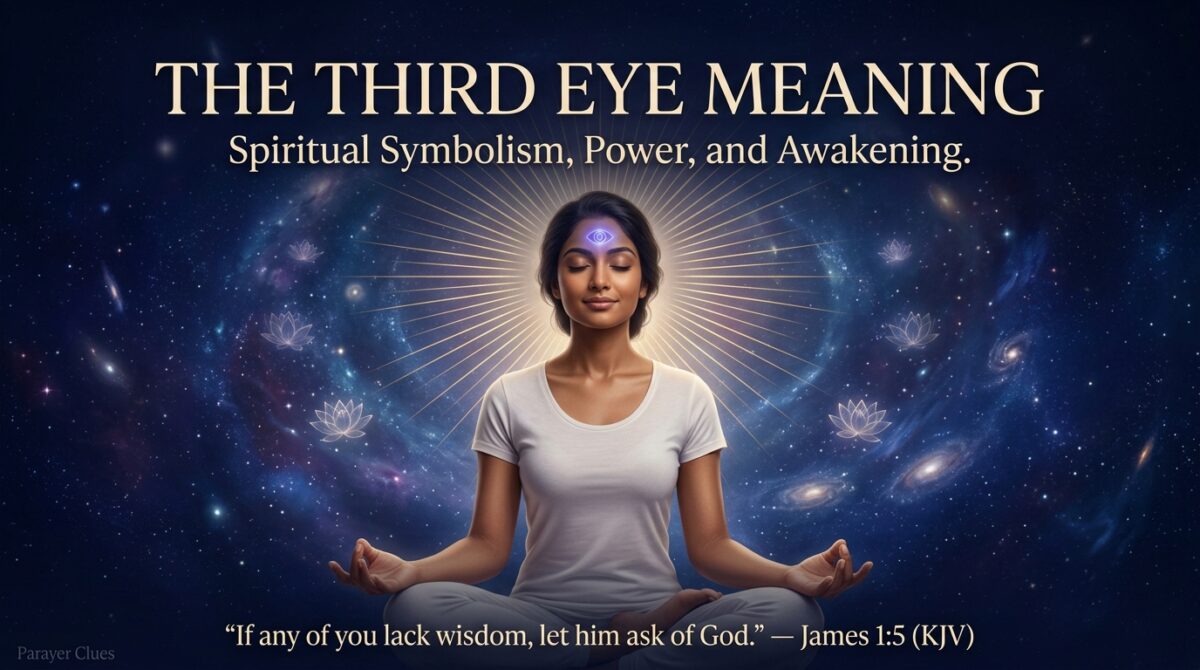
The third eye meaning is often linked to inner wisdom, spiritual awareness, intuition, and a deeper understanding of yourself. In many spiritual traditions, the third eye is seen as a symbol of looking beyond what your physical eyes can see. It encourages you to trust your inner thoughts, recognize hidden feelings, and explore life with a more open mind.
But what does the third eye really mean, and why do so many people connect it with spiritual awakening? The third eye is commonly associated with the Ajna chakra, which is known as the sixth chakra in Hindu and yogic traditions. It is often represented by the space between the eyebrows and symbolizes clarity, insight, and self-awareness.
Understanding the third eye meaning can help you explore its spiritual significance, common symbols, and role in meditation. Could the third eye be a reminder to listen to your intuition and see life from a deeper perspective? Let’s explore its spiritual meaning, signs, symbolism, and practical ways to develop greater awareness.
What Is the Third Eye? Understanding Its Spiritual Meaning
The third eye is a spiritual symbol linked to intuition, inner wisdom, awareness, and a deeper understanding of life. It is often described as an inner eye that helps people look beyond the physical world and reflect on their thoughts, feelings, and experiences. In many spiritual traditions, it represents the ability to gain insight and see situations from a broader perspective.
The third eye is commonly associated with the Ajna chakra, also known as the sixth chakra in Hindu and yogic traditions. It is traditionally linked to the space between the eyebrows. Although some people believe the third eye offers spiritual insight, there is no scientific evidence that humans have a supernatural eye or hidden power in this area.
See Also: Dreams About Teeth and Wealth: Hidden Spiritual & Biblical Meanings
The Spiritual Significance of the Third Eye
The spiritual meaning of the third eye centers on self-awareness, wisdom, and personal growth. Many spiritual teachings describe it as a symbol of understanding yourself more deeply and becoming aware of patterns in your thoughts and behavior. It can also represent a desire to discover meaning beyond everyday experiences.
For some people, the third eye serves as a reminder to slow down, listen to their inner thoughts, and approach life with greater clarity. Its spiritual significance may include:
- Inner wisdom: Learning from personal experiences.
- Intuition: Paying attention to feelings while considering facts.
- Spiritual awareness: Exploring personal beliefs and values.
- Mental clarity: Looking at situations from different perspectives.
- Personal growth: Becoming more aware of your habits and choices.
These meanings vary across spiritual traditions and individual beliefs.
The Third Eye in Hinduism and the Ajna Chakra
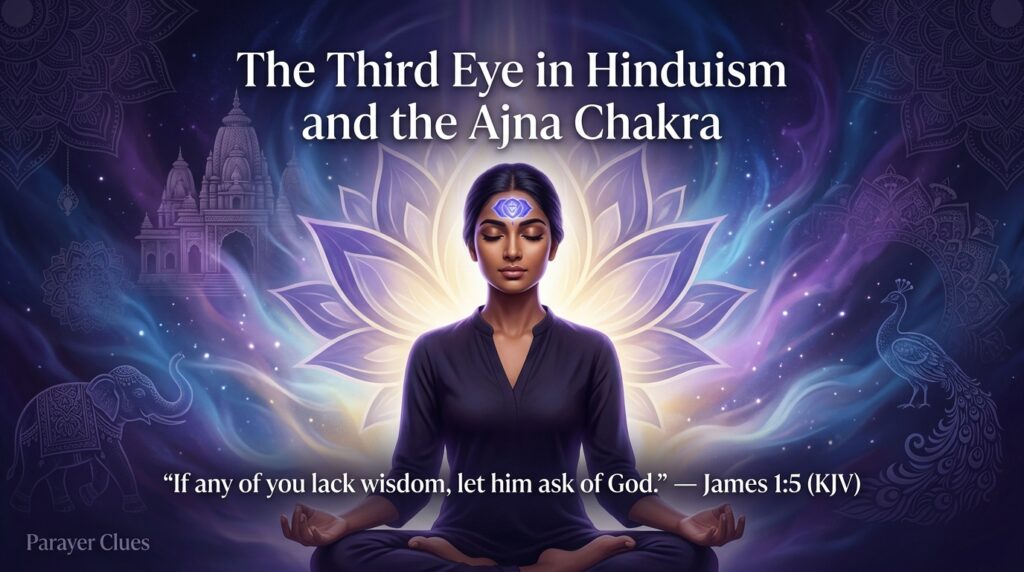
In Hindu traditions, the third eye is strongly associated with Lord Shiva, who is often depicted with a third eye on his forehead. This eye is commonly connected with spiritual knowledge, higher awareness, and the ability to see beyond ordinary appearances. In traditional stories and religious art, it can also represent powerful transformation and the destruction of ignorance.
The Ajna chakra belongs to the traditional chakra system used in Hindu and yogic teachings. The word Ajna is commonly translated as “command” or “perception,” and this chakra is associated with awareness, insight, and inner understanding. Practices such as meditation, yoga, and focused breathing may be used to explore these ideas, although chakra energy is part of a spiritual framework rather than a scientifically established physical system.
What Does the Third Eye Symbolize?
The third eye symbolizes the search for truth, inner understanding, and a broader view of life. Rather than representing ordinary physical sight, it is often used as a metaphor for recognizing deeper meanings, questioning assumptions, and becoming more conscious of your thoughts and actions.
Its symbolism can also relate to wisdom and balance. In spiritual teachings, the third eye encourages people to combine intuition with thoughtful judgment instead of relying only on appearances. Common symbolic meanings include:
- Wisdom and knowledge: Understanding lessons from life.
- Clarity and perception: Seeing a situation from a new angle.
- Awakening: Becoming more conscious of your beliefs.
- Balance: Bringing thoughts, emotions, and actions into harmony.
- Transformation: Letting go of unhelpful habits and assumptions.
Third Eye Symbolism Across Different Spiritual Traditions
The third eye does not have exactly the same meaning in every culture or religion. Its symbolism is especially prominent in Hinduism and some yogic traditions, where it is associated with Lord Shiva, the Ajna chakra, and spiritual insight. Other spiritual movements use the third eye as a broader symbol of intuition, inner vision, or expanded awareness.
It is important to understand these traditions on their own terms rather than treating them as identical. Some Buddhist imagery includes a mark or feature associated with spiritual insight, but interpretations differ across Buddhist schools. Modern spiritual teachings may also connect the third eye with personal awakening and mindfulness.
| Tradition or perspective | Common association |
|---|---|
| Hinduism | Lord Shiva, spiritual knowledge, and transformation |
| Yogic traditions | Ajna chakra, concentration, and inner awareness |
| Some Buddhist traditions | Spiritual insight and awakened understanding |
| Modern spirituality | Intuition, personal growth, and inner vision |
| Symbolic interpretation | Wisdom, clarity, and looking beyond appearances |
These are broad summaries, and beliefs differ within each tradition.
What Does the Third Eye Do? Exploring Its Purpose and Power
In spiritual teachings, the third eye is believed to represent the ability to develop insight, recognize patterns, and understand experiences on a deeper level. Some people describe its purpose as helping them become more aware of their emotions, values, and decisions. Others connect it with meditation and the search for spiritual meaning.
However, these beliefs should not be confused with proven supernatural abilities. The third eye has no scientifically established power to predict the future, read minds, or reveal hidden information. In practical terms, activities associated with third eye awareness may encourage reflection, concentration, and a better understanding of your own thoughts.
What Happens When Your Third Eye Is Open?
In spiritual communities, an “open third eye” usually describes a feeling of greater awareness, intuition, or connection with personal beliefs. People may use this expression when they begin reflecting more deeply, notice their emotional patterns, or develop a stronger interest in meditation and spirituality.
There is no medically recognized test that confirms whether a person’s third eye is open. Experiences such as vivid dreams, strong emotions, or unusual sensations can have many explanations. It is helpful to approach them calmly and avoid assuming that every unusual experience proves a spiritual awakening.
Read Also: Dreaming of Yellow Snakes: Hidden Spiritual, Biblical & Islamic Meanings
Common Signs Associated With Third Eye Awakening
Some spiritual teachings describe third eye awakening as a gradual process of increased awareness and insight. People who identify with this idea may notice changes in how they reflect on life, respond to emotions, or understand their personal values. These experiences are subjective and do not prove that a supernatural ability has developed.
Common experiences associated with third eye awakening include:
- Greater interest in meditation and self-reflection.
- Increased awareness of personal emotions.
- A desire to understand spiritual ideas.
- More attention to recurring thoughts or dreams.
- A stronger interest in personal values and life purpose.
- A feeling of clarity after quiet reflection.
These experiences can also occur through ordinary emotional development, stress, changing circumstances, or improved self-awareness.
How to Open the Third Eye Through Mindful Practices
Many spiritual traditions connect third eye development with meditation, self-reflection, and a balanced daily routine. These practices can help you explore your thoughts and beliefs without needing to accept every spiritual claim as fact. There is no proven method for activating a supernatural third eye, so focus on activities that support calmness and self-understanding.
Start gently and choose practices that feel comfortable. You do not need to force unusual sensations, stay awake for long periods, or follow strict routines. A gradual approach is more practical and can help you build consistent habits.
Meditation and Mindfulness
Meditation gives you time to notice your thoughts without immediately judging or reacting to them. In some traditions, practitioners focus their attention on the area between the eyebrows as a symbol of the Ajna chakra, while others concentrate on breathing or a calming word.
Begin with a few comfortable minutes in a quiet place. Breathe naturally and gently bring your attention back whenever your mind wanders. You do not need to experience lights, visions, or unusual sensations for meditation to be worthwhile.
Yoga and Ajna Chakra Practices
Yoga combines physical movement, breathing, and attention. In yogic traditions, certain meditation practices are associated with the Ajna chakra and are intended to encourage concentration and inner awareness.
Choose gentle movements and breathing exercises that suit your experience level. Avoid straining, holding your breath for too long, or pushing yourself to achieve a particular sensation. The goal is to support comfort and awareness, not to force a spiritual experience.
Journaling and Self-Reflection
Journaling can help you understand your thoughts, emotions, and recurring concerns. It is also a useful way to explore what intuition means to you and whether your feelings match the facts of a situation.
Try writing about questions such as these:
- What have I learned about myself today?
- Which emotions influenced my decisions?
- What patterns do I notice in my behavior?
- What evidence supports my current beliefs?
- What would help me approach a challenge more calmly?
Over time, these questions may help you recognize patterns and make more thoughtful choices.
Developing Intuition and Inner Awareness
Intuition is often described as an immediate feeling or impression about a situation. In spiritual discussions, it may be connected with third eye awareness. In everyday life, intuition can also come from past experiences, subtle observations, and patterns your mind recognizes without deliberate effort.
You can develop self-awareness by listening to your feelings while checking them against available evidence. For example, if you feel uncertain about a decision, pause and consider the facts, possible outcomes, and advice from someone you trust. Intuition can be useful, but it is not always correct.
Practices for Balancing the Ajna Chakra
In the traditional chakra system, balancing the Ajna chakra means developing clarity, awareness, and a sense of inner harmony. People who follow these teachings may use meditation, yoga, reflection, and other spiritual practices to support this goal. The idea of chakra balance is a spiritual concept, not a medical diagnosis.
You can explore these practices through simple, healthy habits:
- Practice mindfulness: Spend a few minutes noticing your thoughts and breathing.
- Maintain a journal: Record emotions and reflect on recurring patterns.
- Get enough sleep: Give your mind time to rest and recover.
- Spend time in nature: Take a peaceful walk and notice your surroundings.
- Question assumptions: Separate what you know from what you believe.
- Maintain balance: Make time for school, work, relationships, hobbies, and rest.
There is no need to follow every practice. Choose a few that support your well-being and fit naturally into your daily life.
Is It Dangerous to Open Your Third Eye?
The idea of opening the third eye is not, by itself, a scientifically established physical process. Meditation and gentle reflection are generally low-risk for many people, but experiences can vary. Long or intense meditation sessions may sometimes increase anxiety, discomfort, or feelings of disconnection, especially when someone is already under stress.
A balanced approach is best. Keep sessions comfortable, maintain regular sleep, and take a break if a practice makes you feel distressed or unsettled. You do not need to interpret headaches, frightening dreams, or unusual sensations as signs of awakening. If symptoms persist or interfere with daily life, consider speaking with a qualified health professional.
Is the Third Eye Good or Bad? Understanding Both Perspectives
The third eye is generally viewed positively in traditions that associate it with wisdom, insight, and spiritual understanding. For many people, its symbolism encourages self-reflection, patience, and a desire to understand themselves and others more deeply.
However, problems can arise when spiritual ideas are treated as unquestionable facts or when people feel pressured to achieve a particular experience. It is healthier to explore these beliefs with curiosity and common sense. Meditation, reflection, and spiritual study can be meaningful without requiring you to believe that you have supernatural powers.
The Benefits of Third Eye Awareness in Daily Life
Third eye awareness is often used as a spiritual term for greater intuition, reflection, and understanding. When approached in a practical way, it can encourage you to pause before reacting, recognize emotional patterns, and think carefully about your choices. These benefits are connected to everyday habits rather than proven supernatural powers.
Possible benefits of practices associated with third eye awareness include:
- Improved self-understanding: Recognizing your feelings and habits.
- Greater concentration: Practicing attention during meditation.
- Thoughtful decisions: Considering facts alongside emotions.
- Emotional awareness: Identifying feelings before responding.
- Personal growth: Reflecting on mistakes and learning from experience.
- A stronger sense of purpose: Exploring your values and priorities.
Results differ from person to person. These practices are not guaranteed to produce specific outcomes, and they should complement rather than replace practical problem-solving.
Third Eye Connection With Someone: Spiritual Meaning and Intuition
A third eye connection with someone is sometimes described in modern spirituality as a feeling of deep understanding, emotional closeness, or intuitive awareness. People may use this phrase when they feel that they understand another person’s emotions or notice similarities in their thoughts and experiences.
There may also be ordinary reasons for this feeling, such as familiarity, empathy, careful observation, or shared experiences. Feeling strongly connected to someone does not prove that you can read their mind or communicate through supernatural energy. Healthy connections grow through honest conversations, mutual respect, and clear boundaries.
Third Eye Meaning in Dreams and Meditation Experiences
Dreams involving an eye on the forehead, bright colors, or spiritual imagery may feel powerful or memorable. Some spiritual interpretations connect these images with intuition, personal insight, or a desire for greater understanding. However, dream meanings are subjective, and a single image does not have one fixed interpretation.
Dreams and meditation experiences can also reflect memories, emotions, daily events, and imagination. If you have a vivid dream, consider how you felt and what has been happening in your life. You can explore its personal meaning without assuming it predicts the future or proves that your third eye has opened.
Common Myths and Facts About the Third Eye
| Claim | What to understand |
|---|---|
| The third eye is a physical eye hidden in the forehead | The third eye is a spiritual symbol, not a recognized human organ. |
| Opening the third eye guarantees psychic abilities | There is no reliable scientific evidence supporting this claim. |
| Everyone experiences awakening in the same way | Spiritual experiences and personal interpretations vary. |
| The third eye is connected with the Ajna chakra | This connection comes from traditional Hindu and yogic teachings. |
| Meditation can encourage self-awareness | Mindfulness practices may help people notice their thoughts and emotions. |
| Seeing unusual colors proves the third eye is open | Colors or visual experiences alone do not establish a spiritual awakening. |
Approaching these claims thoughtfully allows you to respect spiritual traditions while making informed decisions.
Third Eye Meaning: Common Experiences and Their Possible Interpretations
| Experience or symbol | Possible spiritual interpretation |
|---|---|
| Seeing an indigo or purple color during meditation | Often associated with intuition and the Ajna chakra |
| Feeling more self-aware | Greater attention to thoughts and emotions |
| Having vivid dreams | May reflect memories, emotions, or personal concerns |
| Feeling connected to someone | May reflect empathy, familiarity, or emotional awareness |
| Seeking deeper meaning in life | A desire for personal or spiritual growth |
| Feeling uncertain during spiritual exploration | An opportunity to slow down and reflect |
These interpretations come from spiritual beliefs and are not scientific proof that the third eye has opened. Experiences such as vivid dreams or unusual visual sensations may have other explanations, too.
Third Eye Practices Compared: Benefits, Purpose, and Cautions
| Practice | Main purpose | Helpful consideration |
|---|---|---|
| Mindful meditation | Improve attention and self-awareness | Begin with short, comfortable sessions |
| Gentle yoga | Connect movement with awareness | Choose movements suitable for your ability |
| Journaling | Understand thoughts and emotions | Record experiences without jumping to conclusions |
| Quiet reflection | Explore personal values and intuition | Consider evidence before making decisions |
| Relaxation and regular sleep | Support emotional balance | Maintain healthy daily routines |
You Might Also Like: Coyote Symbolism: Discover Its Spiritual Meaning and Hidden Messages
Conclusion:
The third eye meaning is closely connected with intuition, inner wisdom, self-awareness, and spiritual growth. In Hindu and yogic traditions, it is associated with Lord Shiva and the Ajna chakra. Meditation and reflection can help you explore these ideas at a comfortable pace. However, there is no scientific proof of a supernatural third eye or guaranteed psychic powers. Ultimately, the third eye can serve as a meaningful symbol of looking inward, questioning assumptions, and gaining a clearer understanding of yourself and the world around you.
Frequently Asked Questions About the Third Eye Meaning
What does the third eye symbolize?
The third eye commonly symbolizes intuition, inner wisdom, spiritual awareness, and deeper understanding. Its meaning varies across spiritual traditions.
How do I activate my third eye?
Some traditions recommend meditation, yoga, and self-reflection to explore the Ajna chakra. No method has been scientifically proven to activate a supernatural third eye.
What is the power of the third eye?
In spiritual teachings, the third eye represents insight, perception, and inner awareness. Claims that it grants psychic powers are not scientifically established.
What happens when your third eye is open?
People may describe greater self-awareness or a deeper interest in spirituality. These experiences do not prove that a supernatural ability has developed.
Is the third eye real or just a spiritual belief?
The third eye is a real concept in several spiritual traditions, but it is not a recognized physical organ. Its supernatural abilities have not been scientifically demonstrated.
Is it dangerous to open your third eye?
Gentle meditation is generally low-risk for many people, but intense practices can sometimes cause discomfort or anxiety. Stop if a practice makes you feel distressed.
What are the common signs of third eye awakening?
Some people associate it with vivid dreams, reflection, or increased awareness of emotions. These experiences can have many explanations and are not definitive signs of awakening.
What is the third eye in Hinduism?
In Hindu traditions, the third eye is associated with Lord Shiva and spiritual insight. It is also connected with the Ajna chakra in yogic teachings.
What color represents the third eye chakra?
Indigo is the color most commonly associated with the Ajna chakra in modern chakra illustrations. Some depictions also use deep blue or purple.
What are the benefits of third eye meditation?
Meditation may help improve attention, self-awareness, and emotional understanding. It does not guarantee spiritual awakening or supernatural abilities.