
The Ten Commandments are among the most important teachings in the Bible, giving people timeless guidance about faith, love, honesty, respect, and how to live rightly before God. They continue to shape Christian beliefs and daily life.
These commandments were given by God to Moses on Mount Sinai and are recorded in the books of Exodus and Deuteronomy. They teach believers to put God first while also treating others with kindness, fairness, and respect.
But what do the Ten Commandments truly mean for us today? Their words may be ancient, but their message still speaks to the heart—calling us to choose faith over fear, truth over deception, and love over selfishness. Let’s explore each commandment and discover the wisdom behind these powerful biblical teachings.
What Are the Ten Commandments?
The Ten Commandments are ten important teachings that God gave to the people of Israel through Moses. They teach believers how to love God, respect others, make good choices, and live a life based on truth, faith, and responsibility.
These commandments are found in the Bible and remain important in Christian teaching. They cover both our relationship with God and our relationship with other people, giving simple principles about worship, family, honesty, respect, faithfulness, and contentment.
See Also: Ash Wednesday 2026: Meaning, Fasting, Food, and Lent Guide
Where Are the Ten Commandments Found in the Bible?
The Ten Commandments are mainly recorded in Exodus 20:1–17, where God gives them to Moses at Mount Sinai. They are also repeated in Deuteronomy 5:4–21, when Moses reminds the Israelites of God’s instructions before they enter the Promised Land.
According to the biblical account, Moses went up Mount Sinai and received God’s commandments. These teachings became an important part of God’s covenant with the Israelites and helped guide their spiritual and community life.
Why Did God Give the Ten Commandments?

God gave the Ten Commandments to provide His people with clear guidance about how to live. They taught the Israelites to worship God faithfully, respect His name, honor their parents, tell the truth, and treat other people’s lives and belongings with care.
The commandments also helped people understand the difference between right and wrong. Their lessons include honesty, respect, faithfulness, self-control, responsibility, and contentment—values that can still help people make wise choices today.
You Shall Have No Other Gods
The first commandment teaches people to put God first and remain faithful to Him. It reminds believers that their worship and trust should be directed toward God rather than other gods or anything they place above Him.
For Christians, this can also mean keeping faith important even when life becomes busy or difficult. It encourages people to remember God, depend on Him, and give Him the highest place in their lives.
You Shall Not Make Idols
An idol is something that people treat as a god or worship instead of the true God. The commandment warns against making or worshiping created things as though they have the place that belongs to God.
Its deeper lesson is about where we place our trust and devotion. Money, possessions, popularity, or other things should never become more important than our relationship with God.
You Shall Not Take the Lord’s Name in Vain
This commandment teaches people to treat God’s name with respect and sincerity. God’s name should not be used carelessly, dishonestly, or simply to make false statements seem believable.
It also reminds believers that their words matter. Speaking about God should come from genuine faith and respect rather than using His name in a careless or disrespectful way.
Remember the Sabbath Day and Keep It Holy
The fourth commandment teaches people to remember the Sabbath and treat it as holy. In the biblical setting, the Sabbath was connected with rest, worship, and remembering God as Creator and Lord.
The broader lesson is that people need time to stop, rest, worship, and think about what truly matters. Setting aside time for God can help believers refresh their hearts and strengthen their faith.
Honor Your Father and Mother
The fifth commandment teaches children to honor their parents. Honor can include respect, gratitude, kindness, listening, and showing appreciation for the care parents provide.
For students, this lesson can be practiced through respectful words and actions at home. It does not mean that every family situation is perfect; rather, it presents respect and gratitude as important values in family life.
You Shall Not Murder
The sixth commandment teaches that human life is valuable and should be treated with respect. It calls people away from violence and toward protecting the dignity and safety of others.
For young people, the lesson can also encourage peaceful behavior and respect for classmates, friends, family members, and neighbors. Choosing kindness instead of intentionally hurting others reflects the value placed on human life.
You Shall Not Commit Adultery
The seventh commandment teaches faithfulness within marriage. It emphasizes that marriage should be treated with loyalty, trust, honesty, and respect.
For younger readers, the main lesson is easy to understand: important relationships should not be treated carelessly. Trust matters, promises matter, and people should respect the commitments they make.
You Shall Not Steal
The eighth commandment teaches people not to take something that belongs to another person. Stealing can damage trust and make people feel unsafe about their belongings.
This lesson applies to everyday life, including school and home. Returning something that belongs to someone else, asking before taking things, and being honest about possessions are simple ways to practice this commandment.
You Shall Not Bear False Witness
The ninth commandment teaches the importance of truthfulness. It warns against giving false testimony or making dishonest claims about another person.
Its lesson is especially useful today because words can spread quickly. Before repeating a rumor, accusation, or story about someone, it is wise to ask whether it is true and whether sharing it is fair and helpful.
You Shall Not Covet
To covet means to strongly desire something that belongs to another person in a wrong or unhealthy way. The tenth commandment teaches people not to let jealousy or constant comparison control their hearts.
Instead, it encourages contentment and gratitude. Rather than always thinking, “I want what they have,” we can appreciate our own blessings, work honestly toward our goals, and celebrate the good things in other people’s lives.
What Is the Main Message of the Ten Commandments?
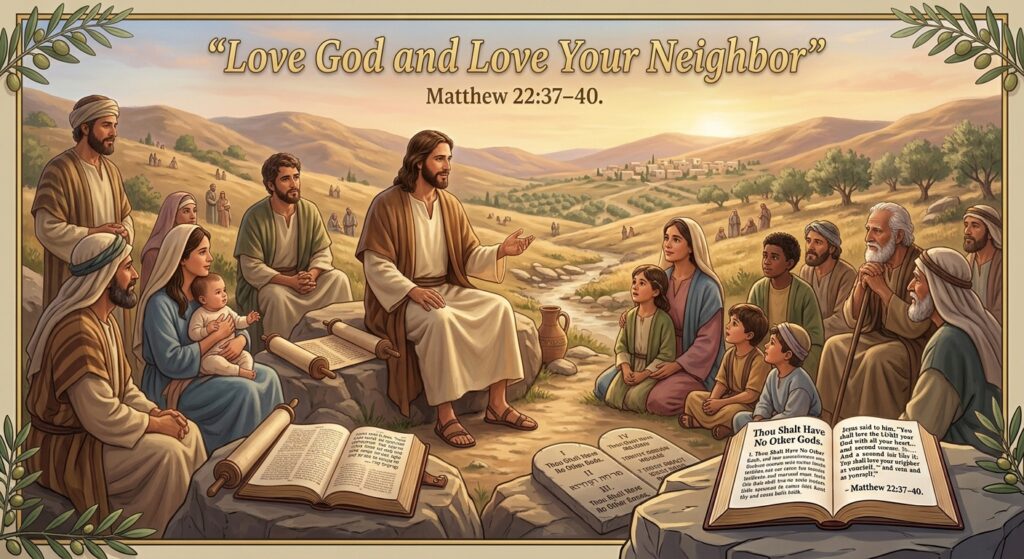
The main message of the Ten Commandments can be understood through two big ideas: love God and treat other people rightly. The first commandments focus mainly on faith, worship, and respect for God, while the later commandments focus on relationships and behavior.
Together, they encourage people to live with honesty, respect, faithfulness, self-control, and love. They are not simply a list of rules to memorize; they provide principles that can help people think carefully about their choices and how those choices affect others.
What Do the Ten Commandments Teach Us About Loving God?
The first commandments teach believers to give God the highest place in their lives. They emphasize faithful worship, avoiding idols, respecting God’s name, and remembering time devoted to God.
These teachings can encourage Christians to make faith part of everyday life. Prayer, worship, gratitude, and respectful speech about God can all help a person keep their relationship with Him at the center of their life.
Read Also: Night Prayer: Powerful Prayers for Peace, Protection & Blessings
What Do the Ten Commandments Teach Us About Loving Others?

- Honor your parents: Show respect, gratitude, and kindness to your family.
- Respect human life: Treat other people with care and dignity.
- Be faithful: Value trust and commitment in important relationships.
- Do not steal: Respect what belongs to other people.
- Tell the truth: Avoid lies, false accusations, and harmful rumors.
- Respect others’ relationships: Do not deliberately damage trust between people.
- Be content: Do not allow jealousy to control your thoughts.
- Practice honesty: Choose truth even when lying seems easier.
- Show kindness: Think about how your actions affect other people.
- Take responsibility: Make choices that show respect for God and others.
The Ten Commandments and the Teachings of Jesus
Jesus emphasized that loving God and loving others are at the heart of God’s law. In Matthew 22:37–40, Jesus teaches about loving God with all your heart, soul, and mind and loving your neighbor as yourself. This helps readers understand the deeper purpose behind God’s commandments.
Jesus did not present faith as simply following rules without love. His teaching points toward a life in which love for God influences how we treat everyone around us. The commandments therefore connect faith with everyday choices, relationships, and character.
Are the Ten Commandments Still Important Today?
Yes, their moral lessons can still provide useful guidance today. Students can apply them by telling the truth, respecting their parents, treating classmates kindly, avoiding stealing, and learning to be thankful instead of constantly comparing themselves with others.
Modern life may look very different from the world of ancient Israel, but people still face choices about honesty, respect, jealousy, relationships, and faith. The Ten Commandments can therefore encourage people to stop and think before making choices that could hurt themselves or others.
How Can Students Follow the Ten Commandments Today?
Students can follow these principles through small choices every day. They can respect their parents and teachers, tell the truth when they make mistakes, return things that do not belong to them, and avoid spreading rumors about classmates.
They can also practice gratitude instead of constantly comparing themselves with friends. Most importantly, they can learn to put God first, treat people with kindness, and think about whether their actions show honesty, respect, and responsibility.
Ten Commandments: Simple Lessons for Everyday Life
| Commandment | Simple Meaning | Everyday Lesson |
|---|---|---|
| Have no other gods | Put God first | Keep your faith strong |
| Do not make idols | Worship God alone | Do not replace God with worldly things |
| Do not misuse God’s name | Respect God’s name | Speak about God sincerely |
| Keep the Sabbath holy | Make time for God and rest | Give time to worship and reflect |
| Honor your parents | Respect your parents | Show gratitude and kindness |
| Do not murder | Respect human life | Treat people with care |
| Do not commit adultery | Be faithful | Respect marriage and relationships |
| Do not steal | Respect others’ property | Be honest |
| Do not lie about others | Speak the truth | Avoid false accusations |
| Do not covet | Be content | Appreciate what you have |
Bible Verses About the Ten Commandments
- Exodus 20:1–17 — This is the main passage describing God giving the Ten Commandments to Israel through Moses.
- Deuteronomy 5:4–21 — Moses repeats the commandments and reminds the Israelites of their covenant with God.
- Matthew 22:37–40 — Jesus explains the importance of loving God and loving your neighbor.
- John 14:15 — Jesus connects love for Him with keeping His commandments.
Together, these passages show that biblical obedience is closely connected with faith, love, and a sincere desire to live according to God’s teachings.
What Is the Difference Between the Ten Commandments and Other Biblical Laws?
The Ten Commandments are a central group of commandments given to Israel and focus on major principles such as worship, family, truth, life, relationships, property, and contentment. They are especially well known because they summarize important responsibilities toward God and other people.
The Old Testament also contains many other laws. These included instructions about worship, ceremonies, community life, justice, sacrifices, cleanliness, and other matters for ancient Israel. Therefore, the Ten Commandments are part of the wider biblical law rather than the entire collection of Old Testament laws.
Ten Commandments in Exodus vs. Deuteronomy
The Ten Commandments appear in both Exodus 20 and Deuteronomy 5. Exodus records the commandments in the story of Israel’s experience at Mount Sinai, where God gives His instructions to Moses.
Deuteronomy presents the commandments again as Moses speaks to the Israelites before they enter the Promised Land. The wording has some differences in the surrounding explanation, but both passages present the Ten Commandments as important instructions connected with God’s covenant.
You Might Also Like: Prayer Quotes for My Customers: Heartfelt Blessings, Success & Divine Favor
Conclusion
The Ten Commandments are more than ancient rules; they offer timeless lessons about loving God and respecting others. They teach honesty, faithfulness, gratitude, responsibility, and kindness. From honoring parents to speaking the truth and avoiding jealousy, their principles can guide everyday choices. For Christians these commandments remain an important part of understanding God’s expectations and living with faith. When their deeper message is understood, they can help people build stronger character, healthier relationships, and a more meaningful relationship with God.
Frequently Asked Questions
What are the Ten Commandments?
The Ten Commandments are ten biblical teachings given by God to Israel through Moses. They guide people in their relationship with God and with others.
Where are the Ten Commandments written in the Bible?
They are mainly found in Exodus 20:1–17 and Deuteronomy 5:4–21.
Who gave the Ten Commandments to Moses?
According to the Bible, God gave the commandments to Moses at Mount Sinai for the people of Israel.
Why are the Ten Commandments important?
They provide important guidance about faith, worship, family, honesty, respect, relationships, and responsible living.
What is the first of the Ten Commandments?
The first commandment teaches people to have no other gods and to remain faithful to God.
What does “do not covet” mean?
It means not allowing jealousy or an unhealthy desire for another person’s possessions or situation to control your heart.
What did Jesus say about the commandments?
Jesus emphasized loving God and loving your neighbor as yourself, summarizing the heart of God’s law in Matthew 22:37–40.
Are the Ten Commandments only about rules?
No. They also teach deeper values such as love, faithfulness, respect, honesty, gratitude, and responsibility.
Can children and students follow the Ten Commandments?
Yes. Students can practice their lessons by telling the truth, respecting parents, showing kindness, avoiding stealing, and being thankful.
What is the overall message of the Ten Commandments?
Their overall message is to love God, respect others, choose what is right, and live with honesty and responsibility.